
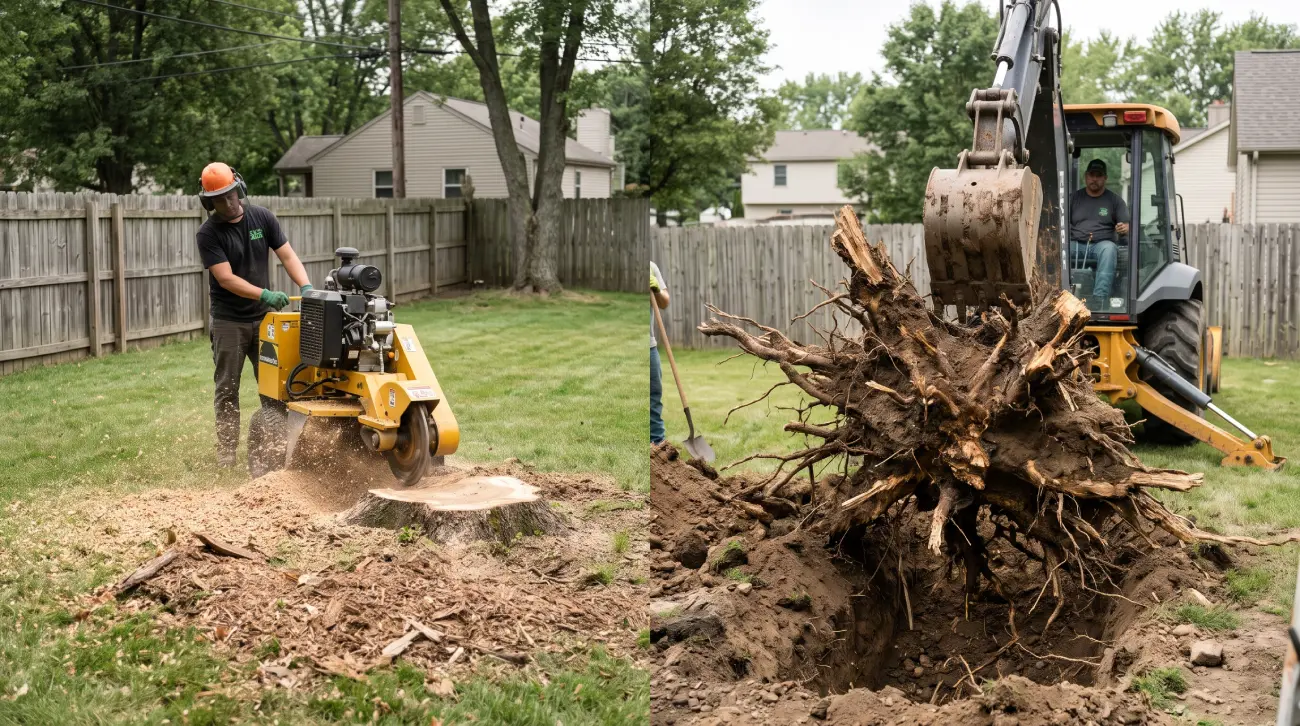
The central difference in stump grinding vs stump removal is what happens to the stump and root area. Grinding reduces the stump into smaller material within the machine’s working reach. Excavation removes the stump and associated material according to the agreed scope.
Neither label, by itself, tells you that the ground is ready for a foundation, new planting, driveway, or finished lawn. That next use should guide the method, extent of work, cleanup, and restoration plan.
For a property in Lancaster or elsewhere in Central Kentucky, explain what you intend to do with the space before requesting a price. A contractor can make a more useful assessment when the goal is clear than when the instruction is simply to make the stump disappear.
Define the Result You Need
A stump can be an obstacle for several reasons. It may interfere with mowing, occupy a desired planting location, block access, or sit within a proposed construction area.
These purposes call for different questions. A lawn-restoration project may prioritize surface use and appearance. A building project needs the ground evaluated against its design and site-preparation requirements.
Write down the future use and any known project documents. If the plan is still uncertain, tell the contractor that the site may later be developed.
Avoid selecting a method solely because it sounds less disruptive or because a neighbor used it successfully. The relevant comparison is the method’s fit with your actual site and next step.
Understand What Grinding Leaves Behind
A grinder works on the accessible stump material within the agreed area and depth. It does not automatically remove every root from the surrounding ground.
Ask what will be ground, which visible roots are included, and what material will remain. “Stump grinding” is not a complete scope description.
The resulting debris and the remaining below-ground material affect the restoration discussion. A surface that looks level immediately after work may still need an appropriate plan before it is used for another purpose.
Do not assume that filling a grinding area makes it suitable for construction. If a foundation, slab, pavement, or other designed improvement is planned, have the relevant professional establish the ground-preparation requirements.
Iowa State University Extension’s tree stump removal guide compares grinding with other removal approaches. It is useful background for discussing the remaining below-ground material and the restoration needed for your next use of the area.
Understand What Excavation Includes
Excavation can remove the stump and associated roots or surrounding material within a defined scope. The extent depends on the stump, site, equipment, access, and project requirements.
Ask the contractor to describe the anticipated excavation area and how the removed material will be handled.
An excavated opening also needs a restoration or next-stage plan. Backfill, material selection, placement, and any required verification are separate subjects that should be addressed rather than assumed.
For a construction site, the designer or appropriate ground professional may need to define what material must be removed and what constitutes acceptable preparation. The contractor’s equipment choice should follow that requirement, not establish it informally.
Siteworx’s land clearing and excavation information is relevant when stump work forms part of a larger site-preparation scope.
Compare Disturbance in Context
Grinding and excavation can affect the surrounding area differently, but the result depends on the actual job. Access routes, working space, nearby improvements, and debris handling all matter.
A small machine still needs a route to the stump. A larger excavation operation may need space for equipment, removed material, and transport.
Identify fences, gates, irrigation, paths, buildings, trees to retain, and other features before work is planned. Photograph the conditions and make clear which areas require protection.
Do not judge disturbance only by the size of the final stump opening. The equipment route and staging area can be just as relevant to the restoration scope and overall project cost.
Discuss Utilities Before Ground Disturbance
Stump work can involve ground disturbance near buried services. Plan the utility-locate process and any additional investigation appropriate to the site before work begins.
Kentucky 811 provides the state’s public starting point for locate requests and current process information. Follow the applicable instructions and clarify responsibilities with the contractor.
Tell the contractor about known private lines, irrigation, lighting, septic components, or other buried features. Do not assume every underground item will be covered by one marking process.
A property owner’s memory is useful context, but it is not a substitute for the required checks. Resolve uncertainties before equipment reaches the work area rather than treating them as a minor detail to address during the job.
Plan Replanting as a Separate Decision
If you want a new tree in the area, discuss the planting goal before choosing the stump scope. The size and condition of the remaining root area, available space, soil, and planting arrangement can matter.
Do not assume grinding creates an immediately suitable planting hole. Likewise, removing a stump does not automatically provide the soil conditions a new tree needs.
Ask the relevant tree or landscape professional where the replacement should go and what preparation is appropriate. The best planting location may not be exactly where the old trunk stood.
Coordinate the stump contractor and planting team so their scopes align. That avoids completing one job only to discover that the next team requires additional work or a different location.
Treat Building Areas Differently From Lawn Areas
A future building pad is not simply a lawn with a different finish. The project may require specific removal, fill, compaction, drainage, and verification procedures.
Show the contractor the proposed structure location and any available plans. Identify whether the stump lies within the intended improvement or an area affecting access and site work.
Do not use a generic grinding-depth recommendation as approval to build. The relevant professionals should establish the requirements for the actual structure and ground conditions.
This distinction is one reason land clearing for construction should be planned around the complete project. The stump method is part of site preparation, not a stand-alone guarantee of buildable ground.
Clarify Cleanup and Material Handling
Ask what will remain on site when the work is finished. Ground material, excavated roots, soil, and other debris may be handled differently.
The quote should state whether removal, loading, transport, disposal, or relocation within the property is included. If material stays, agree on its location and intended use.
Do not assume every type of debris is suitable for every backfill or landscape purpose. Ask the appropriate professional about the requirements of the next stage.
Also discuss the finished condition. “Cleanup included” may not mean the area is graded, topsoiled, seeded, or ready for planting. Specific descriptions make proposals easier to compare and reduce disagreement about what completion looks like.
Compare Quotes on Equivalent Scope
A grinding price and an excavation price may not include the same result. Compare the work limits, access, debris handling, restoration, and any required follow-up.
Ask how the stump’s condition, location, and surrounding obstacles affect the estimate. Photographs can help an initial discussion, but a site assessment may be needed to define the work.
Avoid using a national cost range as a local quote. It may refer to a different scope, access condition, or disposal arrangement.
A useful proposal explains the method and the outcome. If the contractor identifies uncertainty, ask how it will be handled and approved rather than expecting a preliminary number to cover every possible condition.
Coordinate the Sequence With Other Work
Stump work may precede grading, drainage, fencing, planting, or construction. Decide the sequence with the people responsible for those tasks.
For example, restoring a lawn immediately before a larger site-preparation operation may create unnecessary repeat work. Conversely, leaving an area unfinished without a plan can affect access and drainage.
Confirm which team provides the next material, performs the restoration, and checks the result. Record any conditions that must be met before the next stage begins.
A coordinated sequence can make the project easier to manage without making unsupported promises about speed or savings. The benefit is clarity about dependencies and responsibility.
Bring the Next Use to the Siteworx Discussion
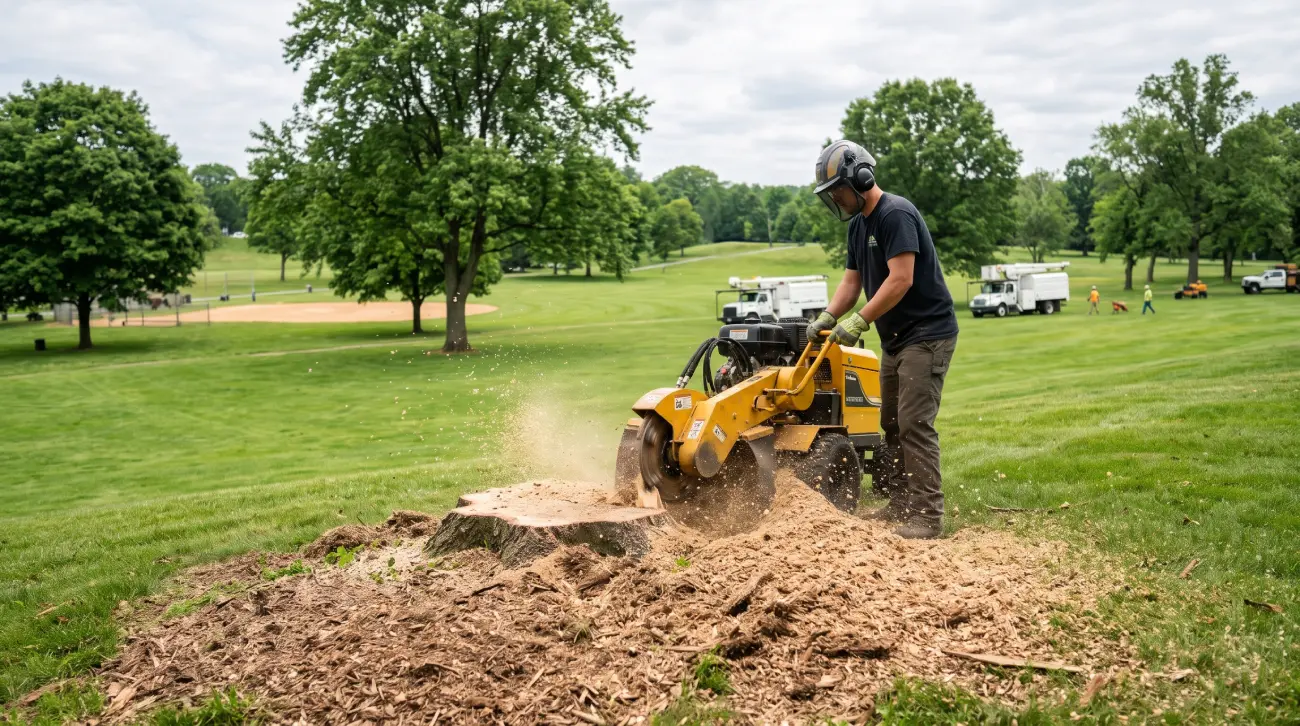
Siteworx Land Clearing & Excavation lists land-clearing services that include stump grinding or excavation. The company is based in Lancaster and serves Central Kentucky.
Describe the location, access, visible stump condition, features to preserve, and what you want to do afterward. Provide plans if the area is part of a proposed build.
Ask the team to distinguish the stump work from any additional site-preparation requirements. If a technical decision belongs with a designer, engineer, or another specialist, make that role explicit.
That conversation is more valuable than choosing a machine name before the contractor understands the intended result.
Choose the Method and the Restoration Together
The practical answer to stump grinding vs stump removal is not that one method wins every comparison. Choose based on the site, future use, access, required removal, and next-stage preparation.
Define what stays, what leaves, and what condition the ground should be in at handover. Keep utility checks and appropriate technical review in the plan.
A stump can disappear from view while important work remains. A clear scope helps ensure the job is evaluated by the result your property needs, rather than by appearance alone.
Frequently Asked Questions
Does stump grinding remove all the roots?
No. Grinding does not automatically remove every root in the surrounding ground. The result depends on the machine’s reach and the agreed scope. Ask which stump and root material will be addressed and what remains, especially if the next use involves planting, pavement, or construction.
Can I build over a stump after it is ground?
Do not treat grinding as approval for building. A proposed structure needs the ground preparation required by its design and site conditions. Have the appropriate professionals identify removal, fill, compaction, and verification requirements before deciding that the area is ready for a foundation or slab.
Is excavation always more disruptive?
The disturbance depends on access, equipment, working area, stump conditions, and restoration scope. Compare the actual plan rather than relying on the method’s name. Include equipment routes, staging, removed material, and the finished condition when evaluating how the work affects the property.
Should debris removal be included in the quote?
It should be clearly described, whether included or separately priced. Ask what material will remain, where it will be placed, and whether loading, transport, disposal, grading, or seeding is part of the scope. A general cleanup statement may not describe the finish you expect.
Do utility checks matter for stump work?
Yes. Plan the applicable locate process and any additional investigation appropriate to the property before ground disturbance. Tell the contractor about known private lines and other buried features. Follow current Kentucky 811 instructions and clarify responsibilities rather than assuming the site is clear because the stump is visible.
Discuss Your Site’s Next Step With Siteworx
Contact Siteworx Land Clearing & Excavation to discuss the stump, access, and future use of your Central Kentucky property. A site-based conversation can help connect the removal method with the preparation and restoration the project actually needs.